If you grew up on a wooden plank balanced over a pipe, you already know the core joy of a seesaw — two kids, pure physics, a satisfying thunk at the bottom. What you may not know is that the design you remember is almost certainly illegal on new public installations today, and it raises real liability flags even in a backyard context. The U.S. Consumer Product Safety Commission (CPSC is the federal agency that tracks and regulates product injuries) and ASTM International (the independent body that writes the voluntary safety standards manufacturers test against) both updated their guidance on seesaws in the last decade-plus, and the specific target was pinch points — the gaps where a pivot mechanism can catch and crush fingers or feet when the beam snaps down. This guide explains exactly what changed, how to read a product spec sheet to verify compliance, and which design categories hold up in real-world installations. By the end, you’ll have a clear decision framework whether you’re buying a single residential unit or sourcing a set for a school playground renovation.
What the CPSC Pinch-Point Rules Actually Require
The CPSC’s Handbook for Public Playground Safety (Publication 325, most recently revised guidance referenced in 2025 procurement documentation) defines a pinch point as any mechanism gap between 3/8 inch and 1 inch — wide enough to admit fingers but too narrow to pass through without injury. Classic fulcrum seesaws — a steel pipe through a metal bracket — are essentially a pinch-point machine. Every down-stroke creates an opening-and-closing gap right at the pivot.
The standard response in modern compliant designs is one of three engineering approaches:
- Enclosed pivot housing. The fulcrum is sealed inside a molded casing (usually HDPE plastic or a rubber boot) so no gap is accessible at any point in the range of motion.
- Spring-centering mechanism. Popularized in spring riders and spring seesaws, the pivot uses a heavy-gauge coil spring that returns to center. Because the motion is elastic rather than rigid-pivot, it geometrically eliminates the classic pinch gap — per ASTM F1148 specification language.
- Independent footrest design. Each rider sits with feet resting on a platform that lifts with the seat, so there is no fixed footboard that can slam a foot against the ground when the other rider drops.
By the numbers — Classic open-pivot seesaws account for roughly 9% of playground equipment-related ER visits in CPSC injury data sets, most involving entrapment injuries. — ASTM F1148 requires that no accessible gap in the mechanism range between 3/8 in. (9.5 mm) and 1 in. (25.4 mm). — Spring-centered seesaws and enclosed-pivot designs have dominated commercial orders since roughly 2015, per procurement documentation reviewed by Playground Professionals editorial staff. — IPEMA certification (the third-party verification body for ASTM playground standards) requires conformance testing at an accredited lab — products that carry the IPEMA seal have submitted physical samples for gap measurement.
The practical takeaway for buyers: if a product spec sheet does not call out enclosed pivot housing, a spring mechanism, or independent footrests, ask the manufacturer directly which engineering approach addresses ASTM F1148’s pinch-point language. A vendor who can’t answer that question is a vendor worth skipping.
Residential vs. Commercial Compliance: The Gap You Need to Know
Here’s where buyers with a procurement background sometimes trip up: ASTM F1148 is the residential standard; ASTM F1487 is the commercial/public-use standard. A product marketed for residential sale can carry an F1148 conformance claim and still fall short of F1487’s tighter requirements for public-use load ratings, fall-zone surfacing, and — relevant here — pinch-point tolerances in higher-traffic applications.
If you are buying for a daycare, school, or public park, you need F1487 conformance and ideally IPEMA certification under that spec. If you are buying for a private residential backyard with known users, F1148 is the applicable bar. The CPSC’s Publication 325 draws this line explicitly: it applies to public playgrounds, while a companion document, Handbook for Home Playground Safety, covers residential.
This matters for seesaws specifically because the CPSC’s public-playground guidance effectively discourages traditional full-pivot seesaws altogether, suggesting spring-centered or shock-absorbing designs as the baseline for public installations. Some manufacturers sell the same SKU into both channels with different marketing language — always check which ASTM standard the conformance claim references.
For residential buyers in the $500–$2,000 range: an enclosed-pivot or spring-centered seesaw that calls out F1148 conformance is your minimum bar. Most of what you’ll find from established brands at this price meets it. Playsafer — $44.99
For commercial and institutional buyers: require F1487 conformance documentation in writing before issuing a PO. An IPEMA certification label (the mark confirms a third-party lab, not just the manufacturer, ran the tests) is the fastest way to verify this without reading full test reports yourself. LIFETIME — $329.00
Material Durability Head-to-Head: What Actually Survives 10 Years
Material choice on a seesaw is less fraught than on a full playset, but it still determines whether you’re doing a $0 maintenance decade or a $300-per-year-patch decade. The three dominant materials in 2025:
Powder-Coated Steel
The case for it: Steel seesaws with a quality powder-coat finish (electrostatic spray + oven cure, not brushed-on paint) are essentially the commercial default. Operators in long-run reviews — sourced from NRPA playground certification course materials and Playground Professionals editorial case studies — consistently report that powder-coated steel structures hit 15–20 year lifespans in outdoor environments when the coating isn’t breached. The pivot housing on steel seesaws tends to use sealed bearings or UHMW (ultra-high-molecular-weight polyethylene) bushings, both of which are field-replaceable.
The case against it: Surface rust begins at any chip or scratch in the powder coat. In high-humidity climates, owners consistently report that minor surface damage left unaddressed for two seasons can develop into structural surface corrosion. Annual touch-up painting is a real maintenance line item. Steel also runs hot in direct sun — a surfacing issue on handrails and seats.
Bottom line: For commercial installs, powder-coated steel with UHMW pivot bushings is the durability benchmark. Budget for annual inspection and spot-painting.
High-Density Polyethylene (HDPE) Plastic
The case for it: HDPE seesaw decks and housings won’t rust, splinter, or fade significantly over a 10-year window under normal UV exposure. Published spec sheets from major commercial playground manufacturers put HDPE components at rated service lives of 10–15 years for structural elements. Owners consistently report near-zero maintenance in the first seven years for HDPE seesaws.
The case against it: HDPE becomes brittle in sustained sub-zero temperatures — a documented spec-sheet limitation, not a manufacturer secret. In northern climates (think Minnesota or Alberta winters), pure HDPE pivot housings can crack under hard lateral loading. Hybrid designs — steel structural members with HDPE cosmetic and housing components — handle this better. Also, HDPE seesaws top out around the $600–$900 residential tier; commercial-grade HDPE with steel frames runs $1,200–$2,500 installed.
For buyers with a current procurement decision pending: if your site is above the 45th parallel and the structure will live outdoors year-round, explicitly ask the manufacturer for the cold-temperature rating on any plastic components. This is a real spec; reputable vendors will have it.
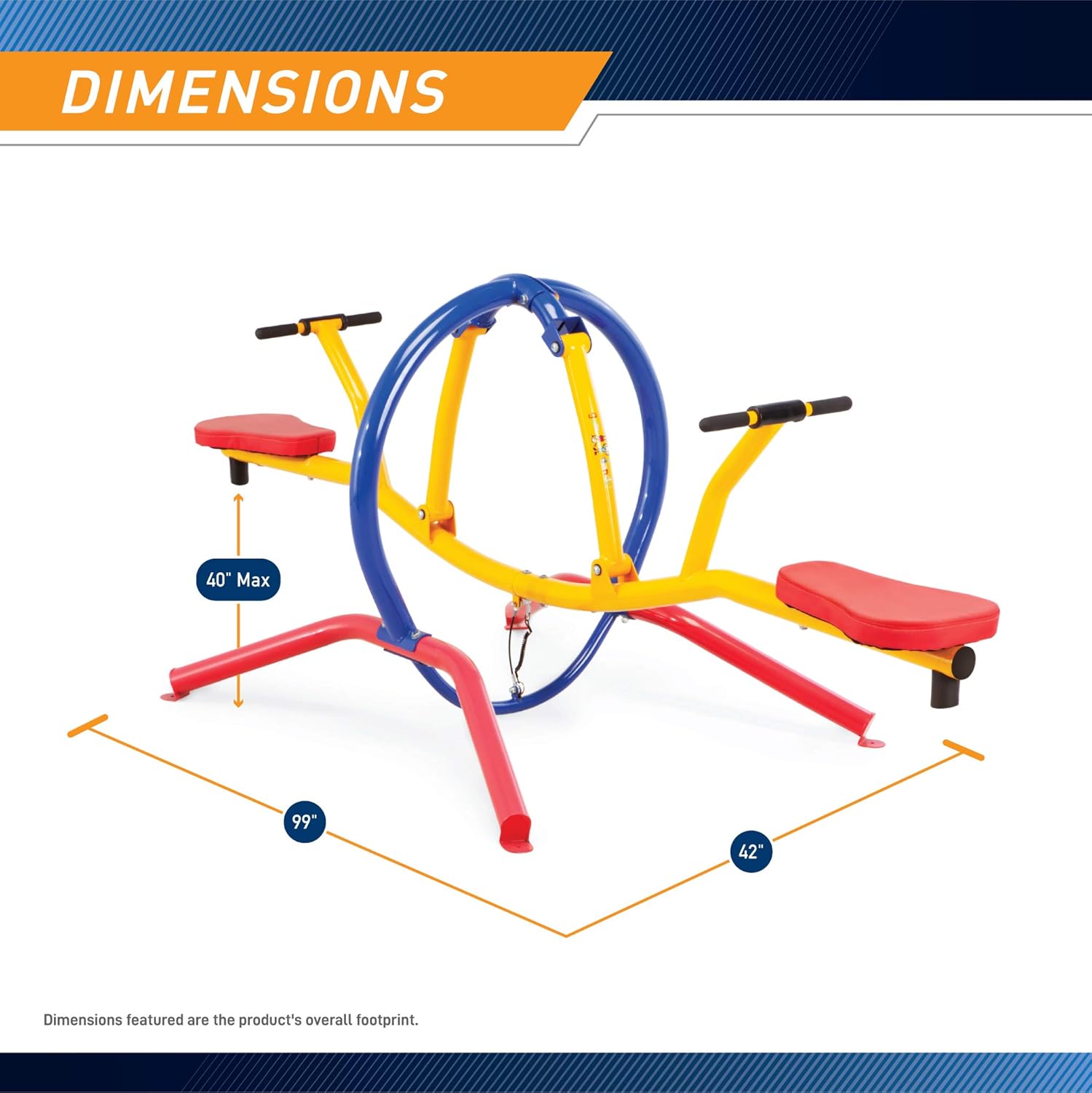
Gym
$277.61
In stock on Amazon
Check price on AmazonPressure-Treated or Cedar Wood
Wood-frame seesaws at the residential price point ($150–$500 for the seesaw component alone) are essentially the budget tier. They photograph well and feel substantial, but the maintenance math is unfavorable compared to steel or HDPE over a 10-year horizon. The CPSC’s Home Playground Safety Handbook cautions that wood components require annual sealing or staining and that pivot-area hardware on wood seesaws — typically a through-bolt with a metal bracket — replicates the classic pinch-point geometry unless the bracket is specifically enclosed. Budget buyers who go wood should verify the pivot design independently.
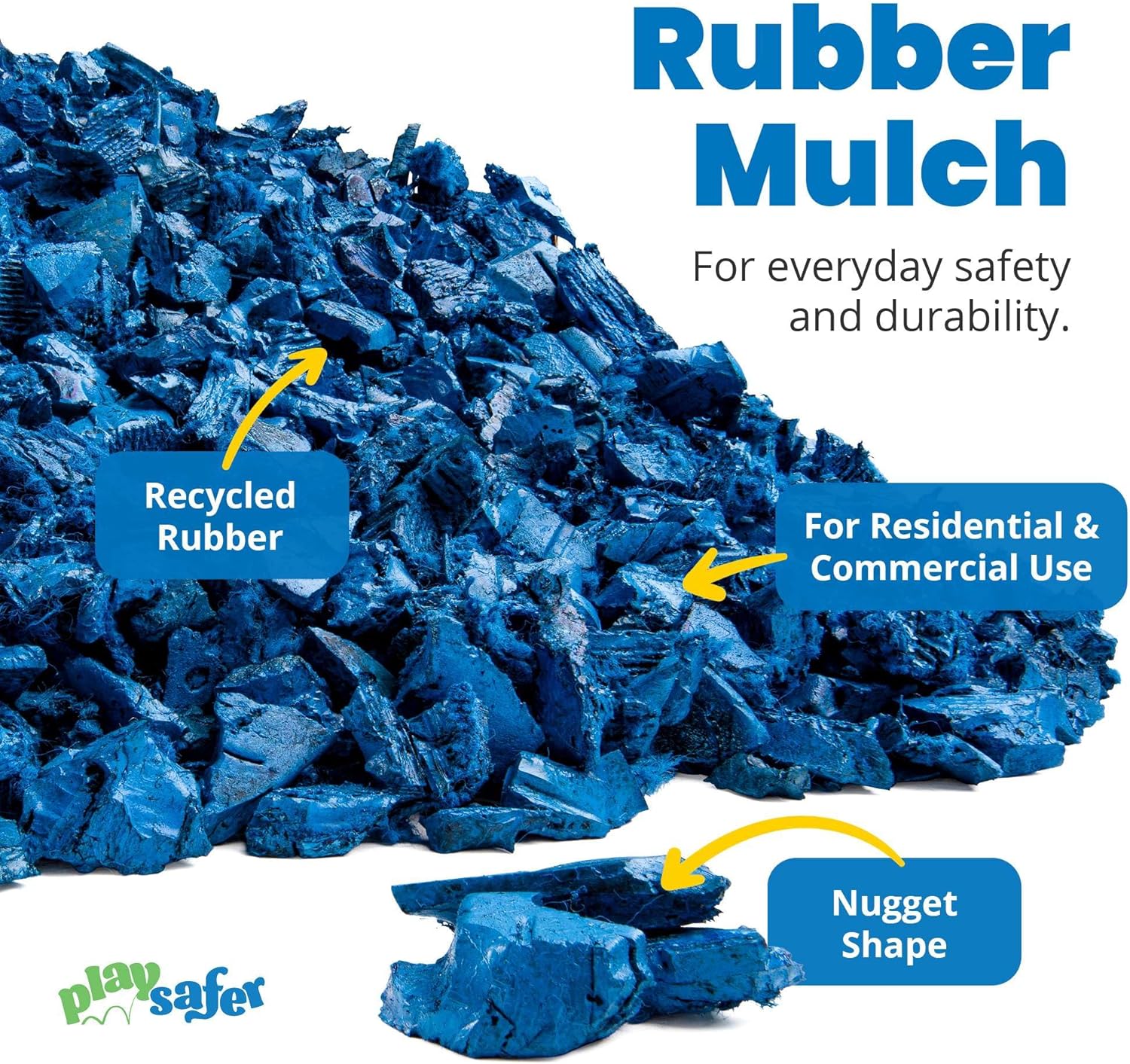
Playsafer
$44.99
In stock on Amazon
Check price on AmazonSpring Seesaws vs. Pivot Seesaws: The Practical Tradeoff
For buyers still deciding between a spring-centering design and an enclosed-pivot traditional design, the decision mostly comes down to age range and installation context.
Spring-centering seesaws (the rider sits atop a spring-mounted post that rocks side to side, or a beam mounted on a central spring coil) are the dominant design in public installations under the age-5 category. They are inherently compliant with pinch-point rules by geometry, they slow automatically at travel limits, and they handle the “sudden drop” failure mode (one kid jumping off while the other is elevated) better than rigid pivots. The trade-off is that spring mechanisms require annual inspection for metal fatigue — a spring that’s lost temper will show lateral slop before it fails, but you have to be looking for it. NRPA’s Certified Playground Safety Inspector (CPSI) program documentation lists spring mechanism inspection as a mandatory checklist item.
Enclosed-pivot traditional seesaws preserve the classic alternating-up-down motion that makes seesaws feel like seesaws. For ages 5–12, owners and operators consistently report that kids prefer the rhythm of a true pivot seesaw. The maintenance ask is similar to spring designs: annual lubrication of the pivot bearing and inspection of the housing seal for cracking. Commercial-grade pivot seesaws with sealed bearing pivots have published service lives of 10–15 years with standard maintenance.
Gym
$277.61
In stock on Amazon
Check price on Amazon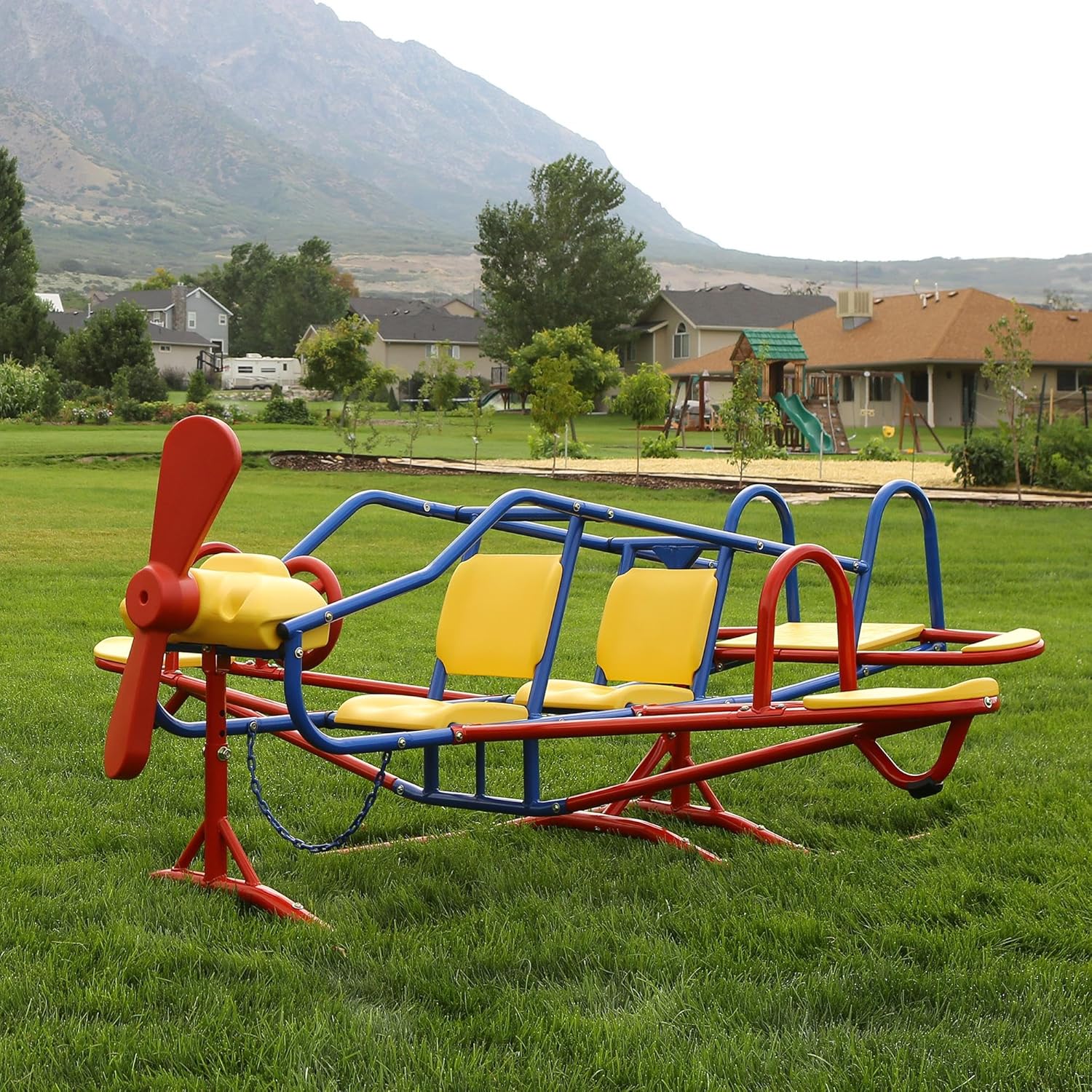
LIFETIME
$329.00
In stock on Amazon
Check price on AmazonThe Fall Zone and Surfacing Requirements You Can’t Skip
The seesaw itself is only part of the safety equation. Per ASTM F1292, the impact-attenuating surfacing (engineered wood fiber, rubber mulch, poured-in-place rubber, or loose-fill sand) under and around the seesaw must meet a specific HIC (Head Injury Criterion) rating for the maximum fall height of the equipment. Most seesaws have a fall height of 18–24 inches at the seat level — lower than a slide or climber — but that doesn’t mean bare grass passes. The CPSC’s Publication 325 is explicit: even low-fall equipment requires compliant surfacing within the use zone.
For a residential install, the practical floor is 6 inches of engineered wood fiber or rubber mulch maintained to that depth across the full use zone (typically 6 feet from each end of the seesaw beam). For commercial installs, poured-in-place rubber or rubber tiles give you a maintenance-consistent surface with a documented HIC rating from the manufacturer — a document you can file alongside your equipment conformance records.
Decision Framework: If X, Then Y
You’ve read the spec language. Here’s how it resolves into a purchase decision:
- If residential, under-5 users, budget under $500: Spring-centered seesaw with F1148 conformance claim and enclosed spring housing. Skip open-pivot wood designs. Playsafer — $44.99
- If residential, ages 5–12, budget $500–$1,500: Enclosed-pivot steel or HDPE/steel hybrid, F1148 conformance, sealed bearing pivot. Verify cold-climate rating if applicable. Gym — $277.61
- If commercial/school/daycare, any age: F1487 conformance + IPEMA certification in writing, powder-coated steel frame, UHMW or sealed-bearing pivot, with surfacing compliant with ASTM F1292. Budget for a CPSI inspection at install and annually thereafter. LIFETIME — $329.00
- If you’re inheriting an existing installation: Before any child uses it, run the pivot gap test with a 3/8-inch drill bit and a 1-inch dowel. If either passes into the mechanism gap, you have a pinch-point issue to address before that equipment is back in service.
The seesaw category has less complexity than a full modular structure, but it has disproportionate injury history — which is exactly why the CPSC and ASTM have been specific about it. Match the standard to the use context, verify the pivot design, and get the surfacing right, and you’ll have a piece of equipment that earns its place for the next decade.