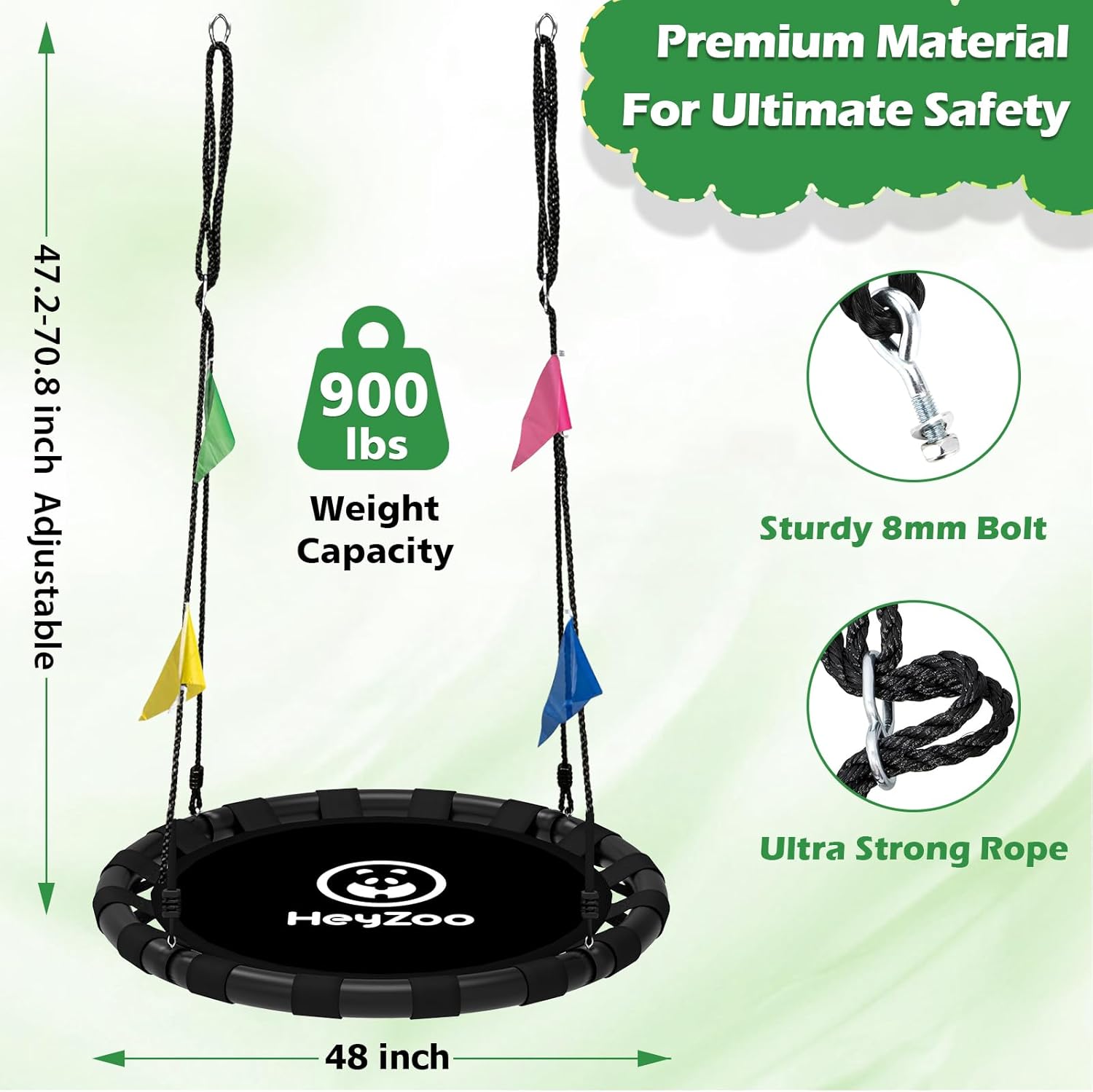
If you’ve already narrowed your playset search down to a swing set or a modular play structure and you’re now staring at the swing attachment options, welcome to the part where most buyers pause and second-guess themselves. A saucer swing is a wide, disc-shaped seat — usually 40 inches across — that lets kids sit, lie, or pile on together. A platform swing is a flat, rigid surface suspended by four chains at its corners, sized for one to several children to stand, sit, or kneel on simultaneously. A glider (sometimes called a buddy swing or tire glider) is a frame-mounted swing that moves forward and backward in an arc but carries two kids facing each other rather than side by side. Each style has a different footprint on your swing beam, a different age-range sweet spot, and a different chain/hardware requirement. This guide will walk through all three so you can make the call confidently — whether you’re buying a backyard set for two kids or sourcing swings for a licensed daycare play yard.
How Swing Style Affects Frame Load, Beam Space, and Certification Compliance
Before you fall in love with a specific swing style, check two things on your existing or planned frame: beam width and rated load capacity.
Beam width matters because saucer swings and platform swings require more lateral spread than a standard belt swing. A saucer swing typically needs 24–30 inches of open beam space between hanging points, compared to roughly 18–20 inches for a belt swing. Platform swings — which hang from four points in a rectangular pattern — need either a dual-beam configuration or a dedicated platform swing hanger (a yoke or A-frame attachment) that hangs from a single beam point. If your set has a single 4×6 top beam, you almost certainly cannot hang a platform swing inline with other swings; it needs its own bay or a dedicated standalone A-frame.
Rated load capacity is where the compliance question gets real. The CPSC’s Public Playground Safety Handbook (Publication 325) specifies that residential swing sets must be engineered for dynamic loads — the forces generated when a swing is in motion — not just static weight. A platform swing carrying two or three children in motion generates significantly more dynamic force than a single-occupant belt swing. ASTM F1148, the Standard Consumer Safety Performance Specification for Home Playground Equipment, sets structural and hardware requirements for home-use sets; commercial installations fall under ASTM F1487. Penn State Extension’s Selecting Safe Home Play Equipment guide recommends verifying that any accessory swing carries an independent certification or at minimum a clear manufacturer load rating before installation. If you’re sourcing for a licensed daycare or park, your jurisdiction may require IPEMA (International Playground Equipment Manufacturers Association) third-party certification on all components — check that before ordering.
By the numbers:
| Swing style | Typical beam space needed | Common weight rating | Typical age range cited by manufacturers |
|---|---|---|---|
| Saucer swing (40”) | 24–30” between hangers | 400–600 lbs | 3–12 years |
| Platform swing (24”×30”) | Dedicated 4-point hanger | 250–400 lbs | 2–8 years (therapeutic variants: all ages) |
| Glider (buddy/tire) | Full swing bay (~36”) | 250–350 lbs per pair | 3–10 years |
Saucer Swings: The High-Engagement, High-Footprint Option
Saucer swings are the swing style that consistently generates the most multi-child engagement, which is both their strength and the source of their most common supervision complaint. Owners across aggregated reviews on major retail platforms note that saucers naturally invite two to three kids to pile on simultaneously, which raises on-the-fly dynamic loads well above the rated single-occupant figure. That’s not automatically dangerous — reputable saucer swings are load-rated to 400–600 lbs specifically to account for multi-child use — but it means the chain, hardware, and beam attachment points absorb more stress per session than a belt swing in the same bay.
Frame compatibility check: Most saucer swings hang from a single point via a swivel or spring-loaded connector. That single-point hang is the key advantage: it drops into a standard belt-swing bay, and the swivel allows full 360-degree rotation, which kids love. The tradeoff is that the 40-inch disc sweeps a wider arc and needs more clearance on both sides of center — Playground Professionals’ swing safety guidelines recommend a minimum of 24 inches of clearance from any fixed structure or adjacent swing path.
Age-range fit: Saucer swings work from roughly 3 years old (once a child has sufficient trunk control to sit unsupported) through early adolescence. The low-to-ground hang height of most residential sets actually helps — kids can self-mount, which builds confidence. For toddlers under 3, the lack of a safety harness means adult spotting is required; the CPSC handbook is explicit that open flat or disc seats are not appropriate for children who cannot sit independently.
For a backyard set serving a wide age range (say, a 4-year-old and a 9-year-old who need to share a swing bay), the saucer is often the most efficient single purchase because both ages will use it at the same time.
 product image](/images/external/397eec73b0ec.jpg)
Hapfan
$309.99
In stock on Amazon
Check price on AmazonFor buyers on a tighter per-swing budget who still want the disc experience, entry-level options get the job done for light residential use — just confirm the chain gauge and swivel rating before buying.
Jungle
$26.99
In stock on Amazon
Check price on AmazonPlatform Swings: The Inclusive, Therapeutic Workhorse
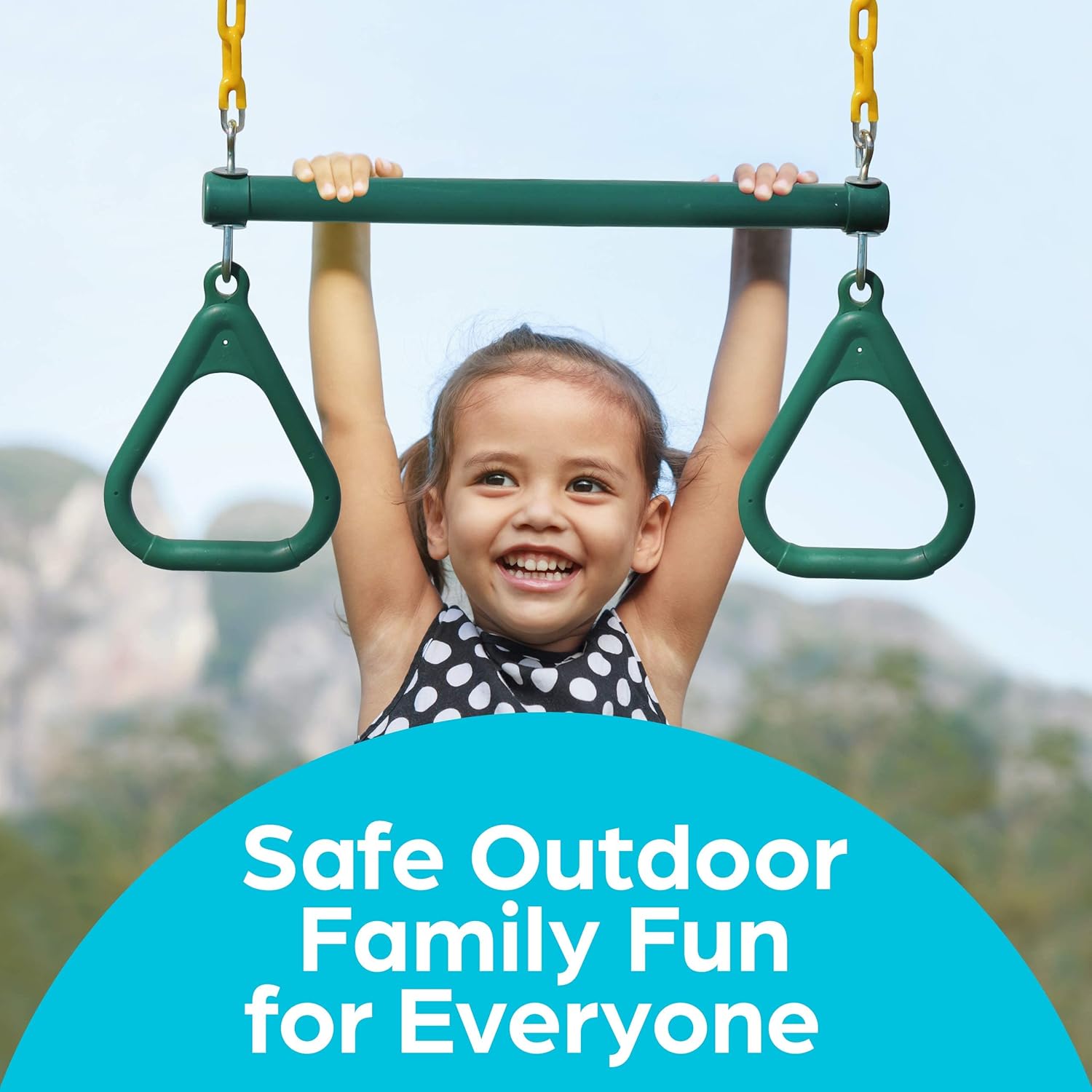
Platform swings are the default recommendation in two very different contexts: therapeutic or sensory-integration settings, and toddler-first setups where kids under 3 need a stable, harness-optional surface they can sit or lie on without tipping off.
The four-point suspension creates a level, stable deck that barely tilts under load — unlike a saucer, which will tilt if weight is uneven. That stability is exactly what occupational therapists recommend for children with vestibular processing differences or sensory processing disorders, and it’s why you see platform swings in virtually every inclusive playground specification. The NRPA’s playground safety resource library notes that platform and tire swings are among the most cited inclusive swing options in park procurement guidelines.
The installation catch: Four-point suspension requires either a dedicated platform hanger (a parallelogram-shaped metal frame that mounts to a single beam point and fans out to four chain connections below) or a purpose-built standalone A-frame. Most residential swing sets do not come with a platform hanger included; it’s an add-on accessory, and fitting one into a multi-bay swing set requires careful measurement. If your existing set has a full-length top beam, you’ll typically sacrifice one belt-swing bay to hang a platform swing. If you’re spec’ing a new commercial structure, list the platform swing bay in your initial layout — retrofitting one into a crowded structure post-install is more expensive and sometimes structurally precluded.
Age-range fit: Platform swings shine hardest for the 18-month to 5-year range when used with a safety bar, and for therapeutic use across all ages. Older children tend to graduate away from platform swings once they prefer the higher-motion dynamics of saucer or belt swings.
Jungle
$26.99
In stock on Amazon
Check price on AmazonFor school or daycare procurement teams sourcing for mixed-ability populations, the mid-tier platform swing with a reinforced deck and padded safety bar is the most defensible purchase:
Swing-N-Slide
$122.50
In stock on Amazon
Check price on AmazonGliders: The Cooperative Play Specialist
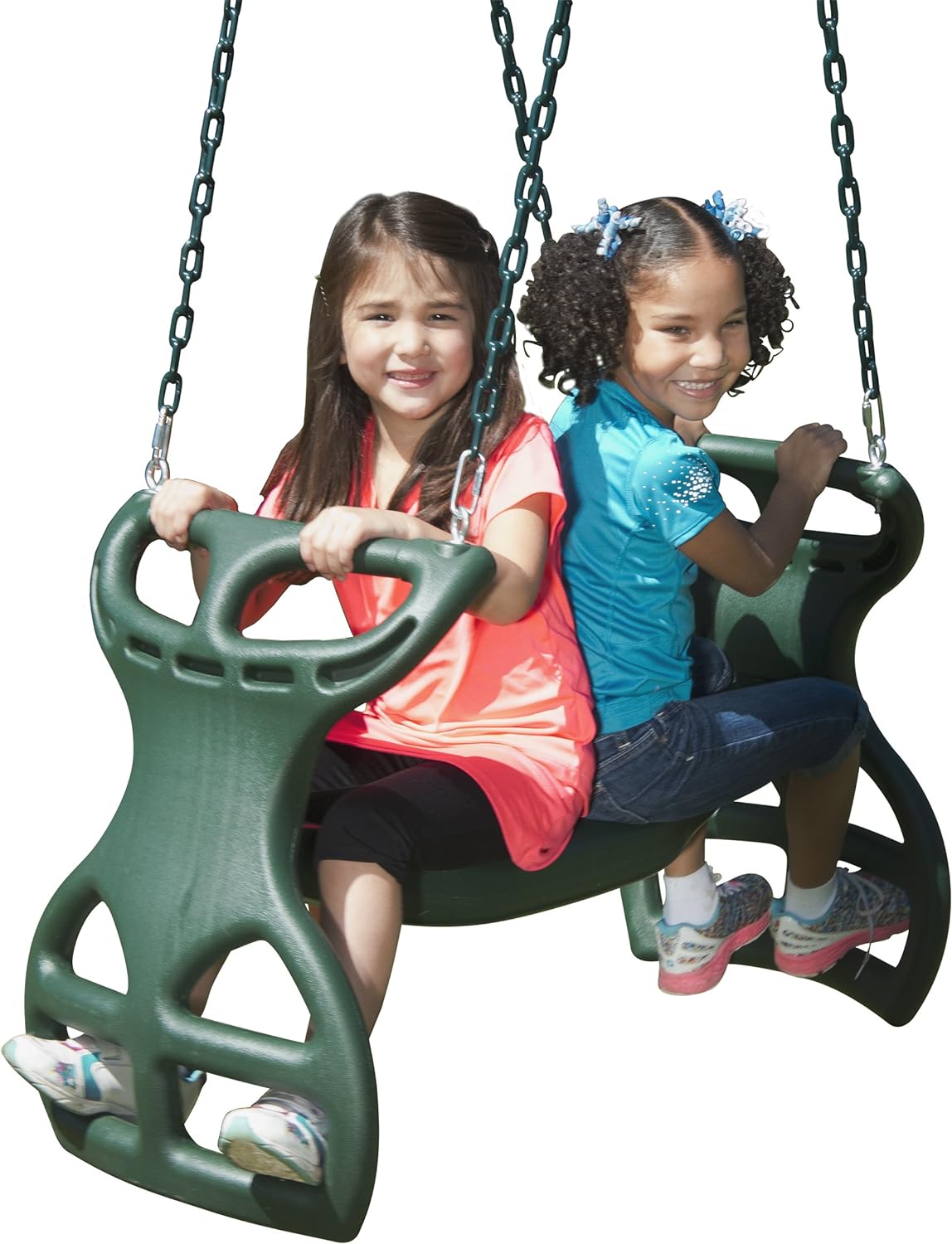
Gliders — also sold as buddy swings, face-to-face swings, or tire gliders — are fundamentally different from saucers and platforms in one important way: they are explicitly designed for two children to use simultaneously in a cooperative, interactive way. The two riders face each other and pump in sync, which builds coordination and peer interaction skills. Child development researchers at Penn State Extension cite face-to-face swings as one of the stronger designs for promoting cooperative play in the 4–8 age range.
The tradeoff is motion envelope. A glider swings in one plane (forward and back) like a belt swing, but it occupies a full swing bay and needs the same clearance zone — 6 feet in front and behind the at-rest position per CPSC guidelines. That clearance zone is sized for a single rider; with two children on a glider, the dynamic feel is higher and the stopping distance after a dismount can be longer. Supervision practices need to account for that.
Frame compatibility: Most residential gliders mount via a single-beam attachment, same as a belt swing, which makes them the easiest of the three specialty swings to retrofit onto an existing set. Confirm the beam size compatibility (most residential sets use 4×4 or 4×6 lumber; glider hangers are sized accordingly) and verify the weight rating covers two riders.
Gliders occupy a useful niche in the backyard: if you have two children in the 4–8 range and limited swing bay space, a glider replaces two belt swings and consistently gets more simultaneous use than two individual swings sitting side by side. Owners in long-run reviews regularly note that gliders become a go-to feature rather than a secondary accessory.
Jungle
$26.99
In stock on Amazon
Check price on AmazonIf budget is tight and you’re choosing between a saucer and a glider for a two-child household, the glider is the underrated call:
Jungle
$26.99
In stock on Amazon
Check price on AmazonSwing-N-Slide
$122.50
In stock on Amazon
Check price on AmazonHapfan
$309.99
In stock on Amazon
Check price on AmazonDecision Framework: If X, Then Y
Here’s how to cut through the analysis once you know your situation:
If you have one open swing bay and kids ages 3–12 who’ll share: Choose the saucer swing. It absorbs the widest age range, hangs from a standard single-point connection, and generates the highest per-square-foot engagement of the three styles. Confirm your chain gauge (most residential saucers ship with 2mm–3mm chain; for heavier multi-child loads, 4mm+ is worth requesting from the manufacturer).
If you have a toddler under 3, a child with sensory processing differences, or you’re buying for a licensed daycare: Platform swing, full stop. The stability and optional safety bar make it the defensible choice under both CPSC and ASTM F1487 commercial guidelines. Budget for the platform hanger hardware separately if your set doesn’t include it.
If you have two kids in the 4–8 range, one open swing bay, and want maximum active use: Glider. It replaces two belt swings in the same footprint and encourages the kind of back-and-forth cooperative play that keeps kids outside longer.
If you’re outfitting a commercial park or school structure with a mixed-age, mixed-ability population: Specify at least one platform swing bay in your initial layout (it’s far cheaper than retrofitting), add one saucer swing in a separate bay for older kids, and price the glider as your third bay if budget allows. The NRPA’s procurement guidance consistently supports this three-style mix for inclusive design.
Swing-N-Slide
$122.50
In stock on Amazon
Check price on AmazonFor premium residential buyers who want commercial-grade hardware on a home set — heavier chain gauge, stainless swivel hardware, higher load ratings — the upgrade is worth it if your structure is spec’d for it:
Hapfan
$309.99
In stock on Amazon
Check price on AmazonOne final note: whatever style you choose, verify the swing connects to your frame with hardware rated for dynamic load (not static), and confirm the ground surfacing beneath the swing zone meets CPSC fall-zone depth requirements for your specific swing height. The swing is the visible purchase; the surfacing and hardware are where safety lives.