If you’ve started pricing backyard playsets and noticed that $600 sets and $3,500 sets can look almost identical in a thumbnail photo, you’re not imagining things — and you’re not alone in wondering whether the higher number is marketing or reality. A playset is essentially an outdoor structure your kids will climb, swing, and hang from for years, so the stakes for getting this wrong are higher than most purchases. This guide is written for the buyer who has already ruled out the cheapest end and is now standing at the fork between a $1,200 “good enough” set and a $2,500–$5,000 premium one. We’ll name the actual differences, show the math on total cost over ten years, and give you clear decision rules so you walk away knowing exactly which tier fits your situation.
What “Premium” Actually Means in Playset Terms
Let’s put a working definition on the table. In the $1,500–$5,000 range, “premium” typically refers to three things: lumber grade and treatment, hardware quality, and safety certification level. Each one has a direct line to how long the set lasts and how safe it is — not just a logo on a box.
Lumber: Cedar vs. Pressure-Treated Pine vs. Vinyl
The most visible upgrade in this tier is wood species. Budget sets under $800 frequently use pressure-treated pine — pine boards soaked in preservative chemicals to resist rot. Penn State Extension’s guidance on wood preservatives notes that modern treatments (using copper azole or ACQ, which replaced the older arsenic-based CCA in 2003) are considered safe for residential use, but the preservative does leach slightly over time, and the boards tend to check (crack along the grain) within a few seasons as they dry out.
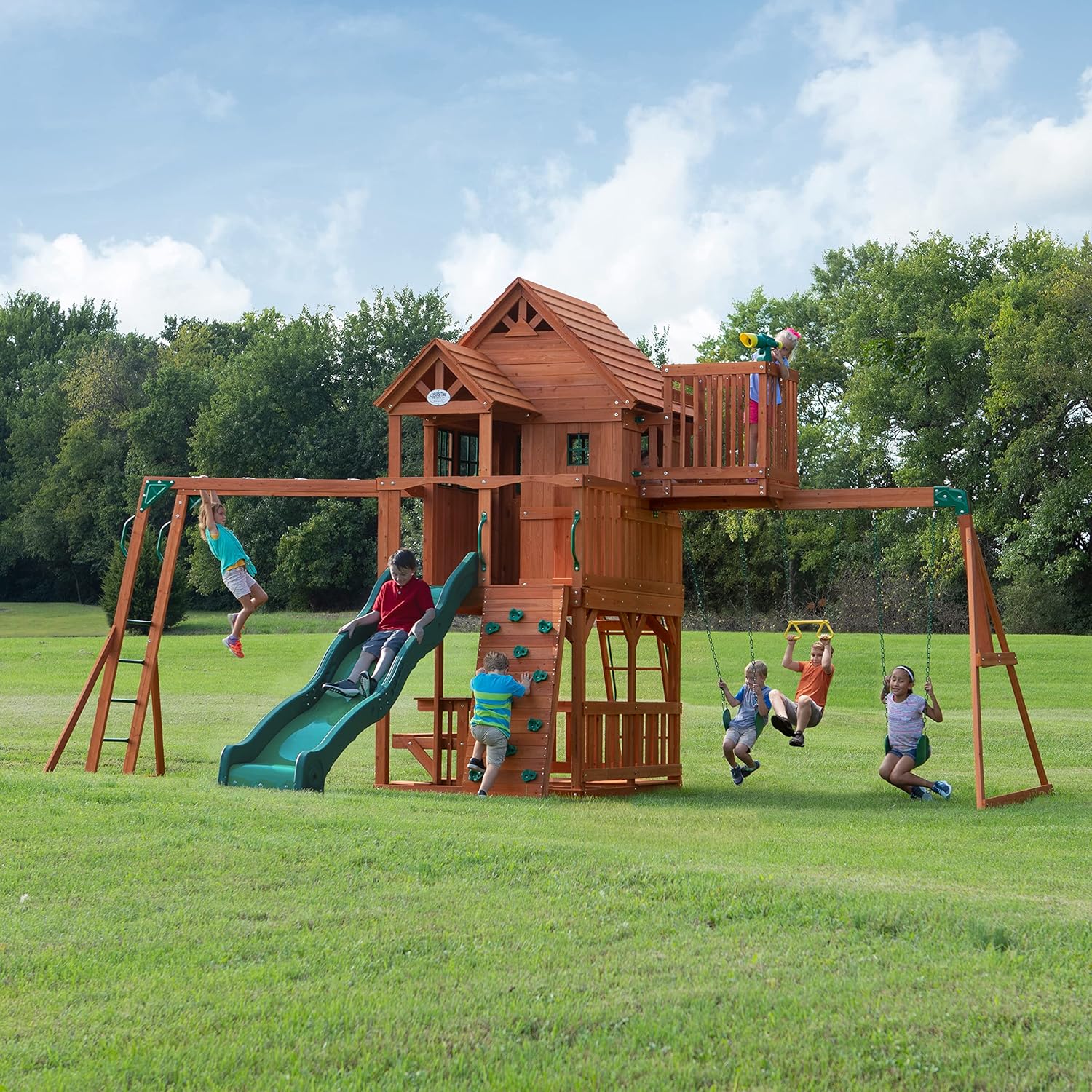
Sets in the $1,500–$5,000 range more commonly use cedar (specifically Western Red Cedar) or redwood. Cedar is naturally rot-resistant without chemical treatment, produces fewer splinters as it ages, and has a warmer aesthetic. Owners consistently report that quality cedar sets retain structural integrity for 15–20 years with basic staining every 2–3 seasons — a meaningful difference from the 7–10-year lifespan commonly cited for lower-grade treated pine.
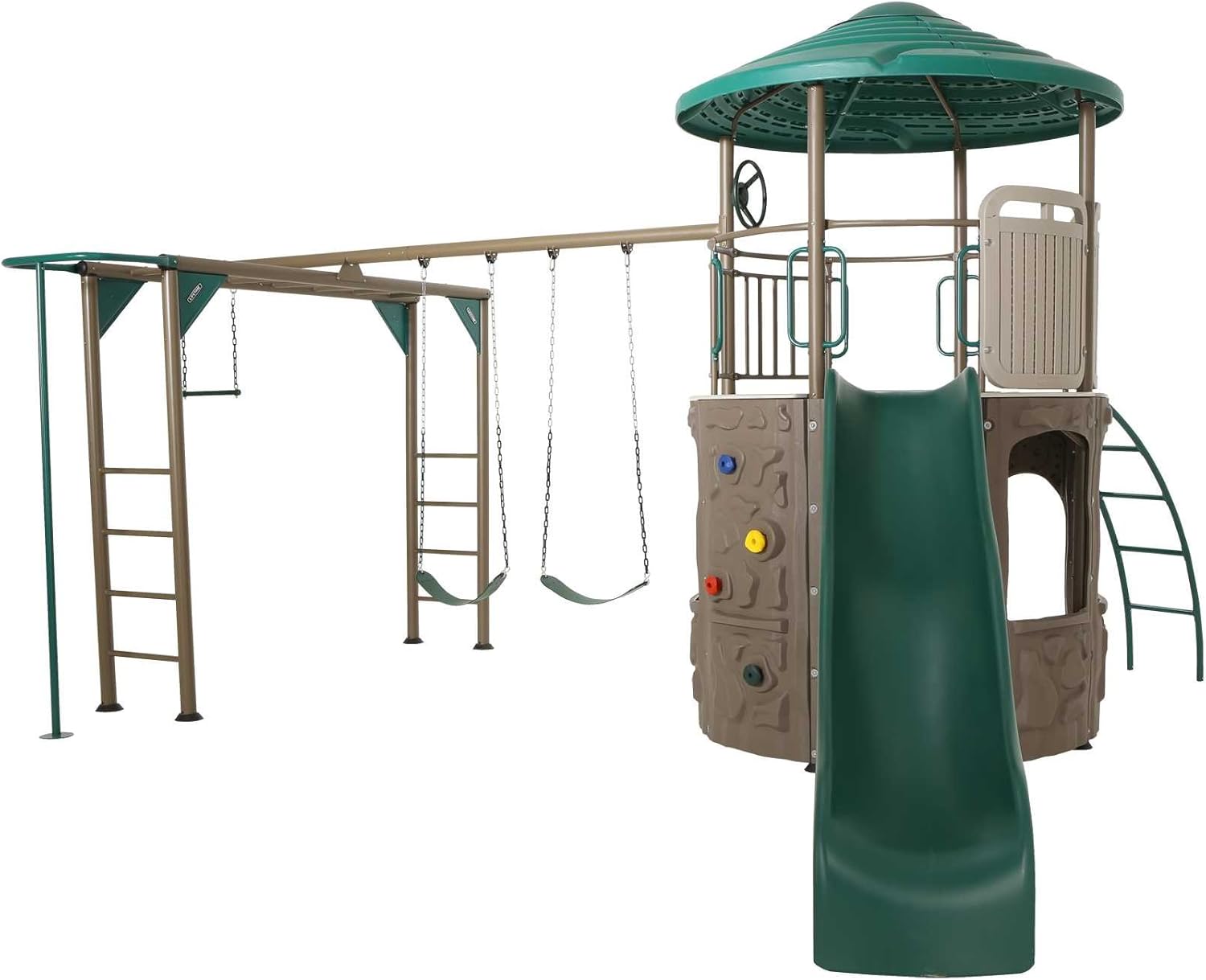
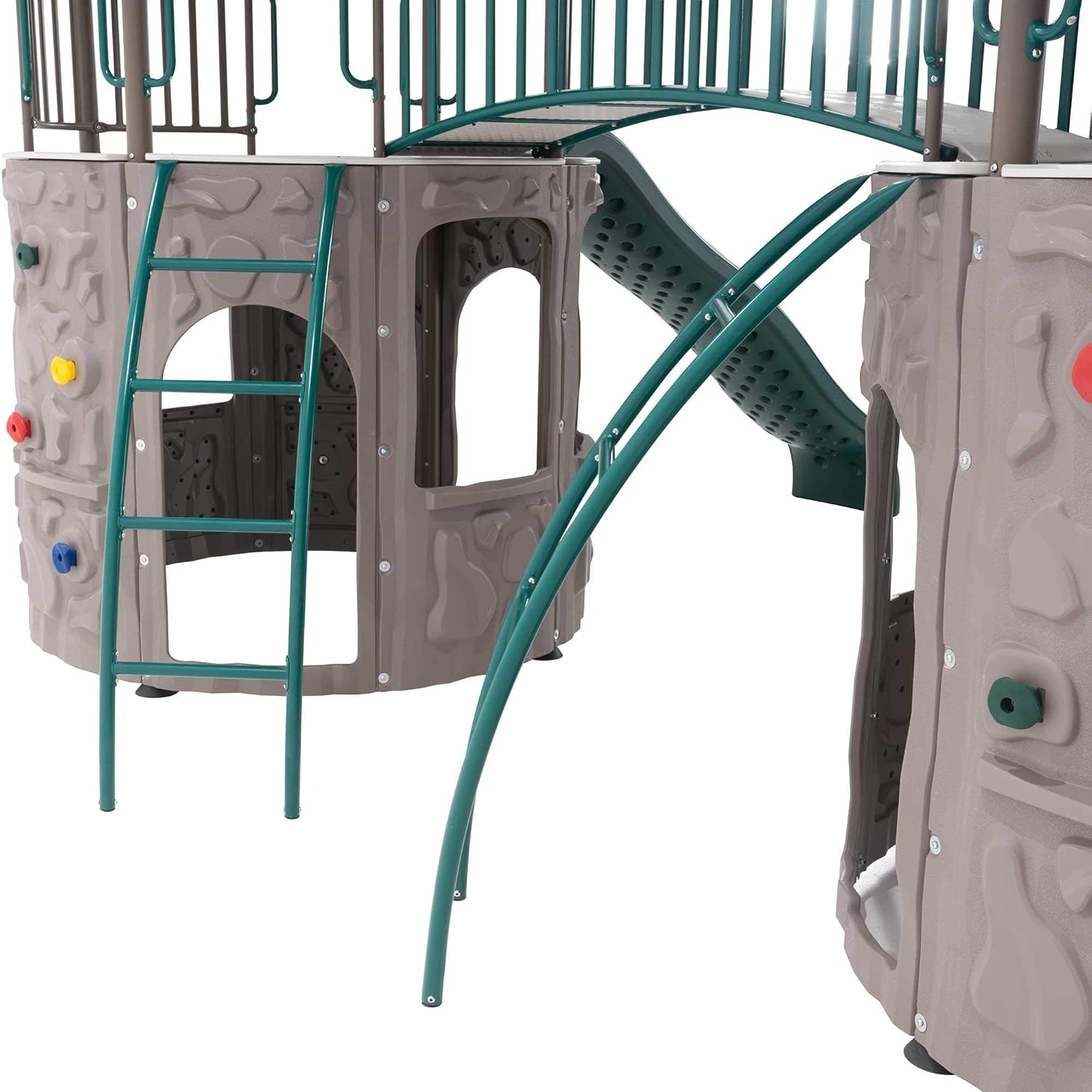
Vinyl and metal are the third option. Vinyl-wrapped components (used by brands like Lifetime) eliminate painting and staining entirely, but reviewers note they can become brittle in extreme cold climates. Galvanized or powder-coated steel frames (common in commercial and upper-residential sets) are the most durable structurally but transfer heat in direct sun — a real consideration if your yard gets afternoon exposure.
LIFETIME
$2,799.97
In stock on Amazon
Check price on AmazonHardware: Where Budget Sets Quietly Fail
Lumber gets the attention, but hardware is where lower-cost sets lose years of life. The swing hangers, bolt connections, and bracket plates on a $700 set are typically zinc-plated steel — functional when new but prone to rust in humid climates within 3–5 years. Premium sets in this tier use galvanized or stainless steel hardware, and the difference is visible: heavier gauge bolts, wider bracket footprints, and swing hangers rated for real dynamic loads rather than static weight.
The CPSC’s Handbook for Public Playground Safety (Publication No. 325) specifically calls out hardware corrosion as one of the leading causes of play structure failure over time — not initial structural collapse, but gradual loosening at connection points that goes unnoticed until a fastener pulls through. Tightening a bolt once a year sounds trivial; realizing a swing hanger has corroded through is not.
Safety Certifications: What ASTM F1148 and CPSC Compliance Actually Mean
This is where a lot of buyers get confused, so let’s be precise.
ASTM F1148 is the consumer safety standard published by ASTM International for home playground equipment. It covers things like entrapment hazards (gaps that could trap a child’s head or neck), minimum fall zone dimensions, and load requirements for climbing components. Manufacturers self-certify to ASTM F1148 — meaning they claim compliance but a third party doesn’t independently verify it at the residential product level.
CPSC compliance refers to meeting the guidelines in the CPSC’s Handbook for Public Playground Safety. Again, for residential sets, this is largely self-reported.
IPEMA certification (International Play Equipment Manufacturers Association) is the step up: an independent, third-party lab actually tests the product against ASTM standards and issues a certificate. When you see an IPEMA seal on a residential set, that’s the closest thing to independently verified safety you’ll get at this price tier.
Why it matters in the $1,500–$5,000 range: The majority of sets under $1,200 claim ASTM compliance in their marketing copy but provide little documentation. Sets in the $1,500–$5,000 range from established brands more commonly offer actual compliance documentation, and a handful carry IPEMA certification. Always ask for the certificate number, not just the claim.
By the numbers
- CPSC data (2024 estimates): ~200,000 playground-related ER visits annually in the U.S., with home equipment accounting for roughly half
- ASTM F1148 requires a minimum 6-foot fall zone radius around all equipment; many budget sets ship with diagrams showing 4 feet
- Penn State Extension recommends resurfacing impact-absorbing ground cover (wood chips, rubber mulch) every 1–2 years to maintain the 12-inch depth that cushions falls from up to 8 feet
True Total Cost: Sticker Price Is Only the Opening Bid
Here’s the math that most product pages skip. A $1,200 set and a $2,800 set don’t have a $1,600 gap when you look at 10-year cost — they often have a much narrower one, or the premium set wins outright.
Scenario A: $1,200 entry-level set
- Sticker: $1,200
- Installation (professional, if not DIY): $300–$600
- Surfacing (rubber mulch, 6-inch depth, ~150 sq ft fall zone): $400–$700 at install, plus $150–$300 refresh every 2 years → ~$1,200 over 10 years
- Staining/sealing treated pine every 18 months: ~$40/application → ~$280 over 10 years
- Hardware replacement (swing hangers, bolts at year 4–6): ~$80–$150
- Likely replacement or major rebuild at year 7–9: $600–$1,200
10-year total: ~$4,000–$5,100
Scenario B: $2,800 premium cedar set
- Sticker: $2,800
- Installation: $400–$700
- Surfacing: same $1,200 over 10 years
- Cedar staining every 2–3 seasons: ~$40/application → ~$160 over 10 years
- Hardware replacement: minimal if galvanized; budget $50–$80
- Expected lifespan: 15–20 years, so no rebuild in the 10-year window
10-year total: ~$4,600–$5,000
The gap closes to near zero. The $2,800 set gives you a structure that’s still standing — and likely safe — when your youngest ages out. The $1,200 set may require a mid-cycle replacement that erases any initial savings.
LIFETIME
$2,799.97
In stock on Amazon
Check price on AmazonFor buyers who’ve been researching for a few weeks and want to see the full range side by side before committing:
Backyard
$2,198.98
In stock on Amazon
Check price on AmazonLIFETIME
$2,799.97
In stock on Amazon
Check price on Amazon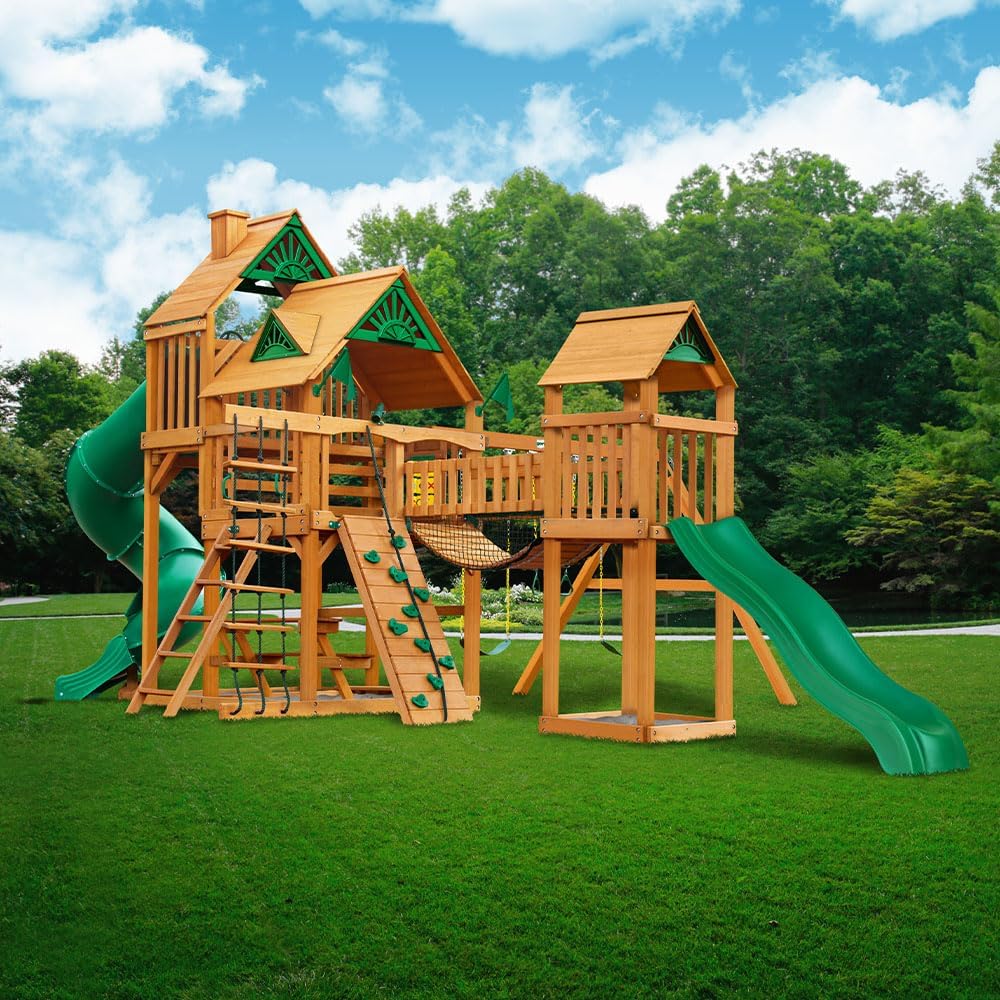
Gorilla
$4,999.99
In stock on Amazon
Check price on AmazonAge Range and Growth Path: Matching the Set to Your Timeline
One of the most common regrets owners report in long-run reviews is buying a toddler-optimized set that a 7-year-old has mentally aged out of, or buying a structure with monkey bars a 3-year-old can’t reach. Premium sets in this tier solve this more deliberately.
Modular design is the key phrase to look for. Sets with modular attachment points let you swap out a baby bucket swing for a trapeze bar, add a rock wall, or extend a lower deck as kids grow. Gorilla Playsets, Lifetime, and Rainbow Play Systems all use modular architectures in their $1,500+ lines — owners in multi-year reviews consistently note that the ability to reconfigure kept kids engaged 2–3 years longer than a fixed configuration would have.
Age-range labels on product listings are marketing minimums, not maximums. A set labeled “ages 3–10” is built to be safe for a 3-year-old, but that doesn’t mean a 10-year-old will find it interesting. Look at the weight capacity (a proxy for structural robustness) and the challenge level of the climbing features. Sets in the $2,500–$5,000 range typically carry 250 lb per swing bay and 1,000+ lb aggregate deck load ratings — headroom that matters as kids grow and invite friends over.
LIFETIME
$2,799.97
In stock on Amazon
Check price on AmazonThe Decision Framework: If X, Then Y
You’ve done the research. Here’s the condensed decision tree.
If your youngest child is under 3 and your budget ceiling is firm at $1,500: Look at the lower end of this tier with modular upgrade potential. Prioritize the IPEMA certification and galvanized hardware over included accessories — accessories can be added; hardware can’t be swapped cheaply.
If you have kids spanning ages 3–10 and want one set to last the decade: This is the core use case for the $2,000–$3,500 range. Cedar with galvanized hardware, ASTM F1148 documentation, and a modular deck system will serve the full age window without a rebuild. Gorilla — $4,999.99
If you’re buying for a daycare, small school, or multi-family setting: The upper end of this tier ($3,500–$5,000) starts to overlap with commercial-grade residential sets. The NRPA’s playground maintenance guidance makes clear that commercial use requires more rigorous inspection schedules regardless of what the set is rated for — budget for a quarterly inspection and annual hardware audit.
Backyard
$2,198.98
In stock on Amazon
Check price on AmazonIf your climate is extreme (coastal humidity, freeze-thaw cycles, desert heat): Material choice matters more than brand. Vinyl components in hard-freeze climates crack; untreated cedar in coastal environments needs more frequent sealing. Metal sets with powder-coat finish handle temperature extremes best. Gorilla — $4,999.99
If resale value matters to you: Cedar sets from recognized brands (Gorilla, Rainbow, Lifetime) hold resale value meaningfully better than no-name treated pine sets in secondhand markets — a factor worth weighting if you’re in a starter home.
The Short Version
The $1,500–$5,000 premium tier buys you three real things: structural longevity (15–20 years vs. 7–10), independently documented safety compliance, and modular flexibility that keeps kids engaged across multiple developmental stages. The sticker price gap over a $1,200 budget set nearly evaporates over a 10-year horizon when you account for maintenance, surfacing, and likely replacement costs.
If you’re serious about this purchase — and the research time you’ve already invested suggests you are — the math consistently favors spending once, spending right, and buying a set with actual certification documentation rather than marketing language. Ask the retailer for the ASTM compliance certificate number. If they can’t produce it, that tells you something important before you sign anything.
Lifetime
$4,086.99
In stock on Amazon
Check price on Amazon