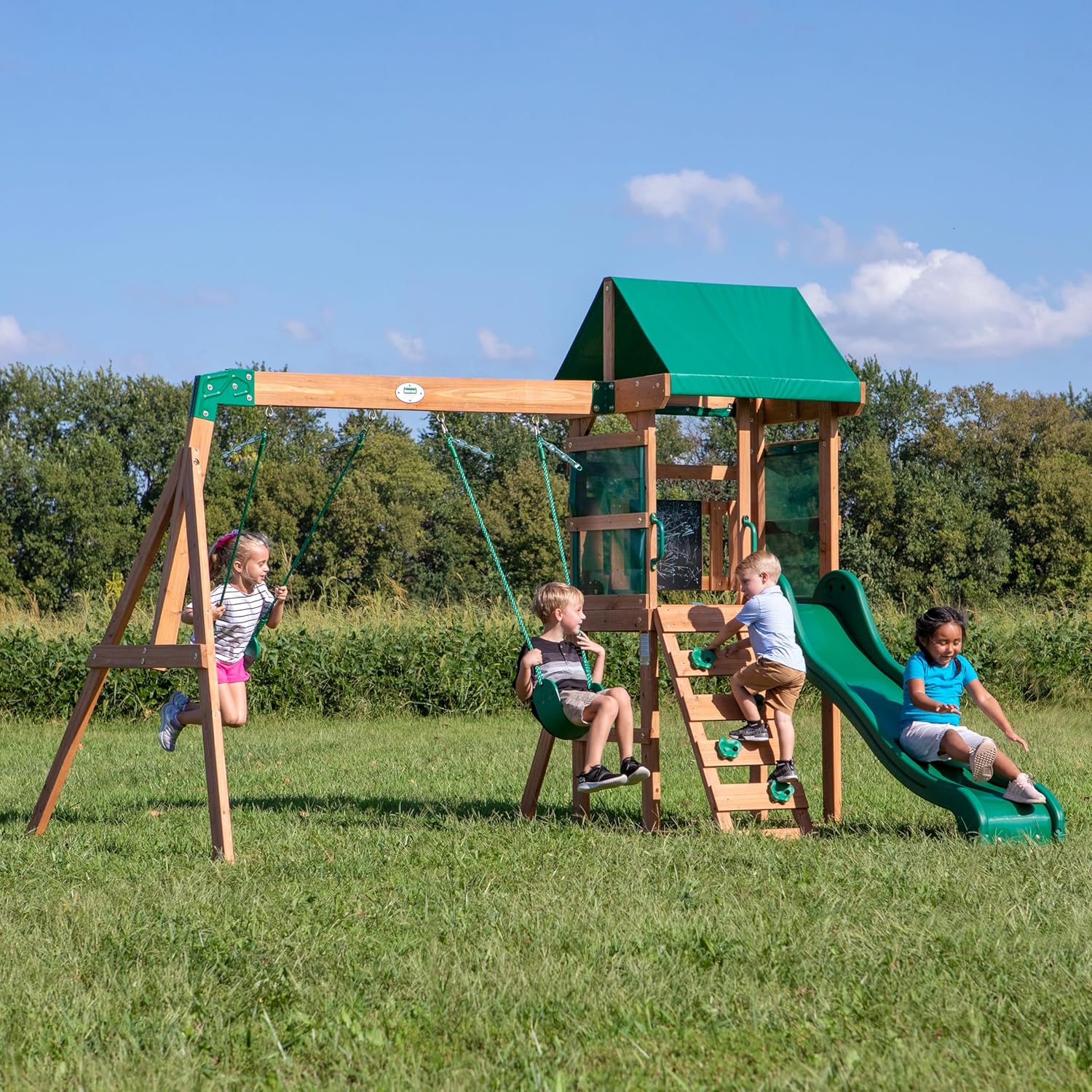
If you’ve spent more than twenty minutes on a playground equipment site, you’ve already noticed that virtually every swing set is built from one of three materials: cedar wood, vinyl-coated or vinyl-wrapped wood, or powder-coated steel. The framing — the posts, beams, and crossbars that hold everything together — is what we’re really talking about here, and the material choice ripples into every other part of your decision: how much you spend up front, how much you spend over the next decade, how much weekend labor you’re signing up for, and whether the set is still standing and safe when your youngest ages out of it around year eight or nine. This article walks through each material honestly — the real trade-offs, the maintenance math, and the conditions under which one choice clearly beats the others. By the end, you’ll have a decision rule you can actually use.
What You’re Really Paying For Over 10 Years
Sticker price is the least useful number in this purchase. A $1,200 cedar set and a $1,200 steel set will have wildly different five-year costs depending on where you live, how many kids use the set, and how diligent you are about seasonal maintenance. Total cost of ownership — the full ten-year spend including purchase, delivery, installation, surfacing, and upkeep — is the number worth building a decision around.
Estimated 10-year total cost of ownership, residential use:
| Material | Typical Purchase Range | Est. Maintenance (10 yr) | Est. Install | 10-Year TCO Range |
|---|---|---|---|---|
| Cedar wood | $800 – $4,500 | $300 – $900 | $200 – $600 | $1,300 – $6,000 |
| Vinyl-coated wood | $1,200 – $5,000+ | $100 – $300 | $300 – $700 | $1,600 – $6,000 |
| Powder-coated steel | $248 – $2,500 | $50 – $200 | $100 – $400 | $400 – $3,100 |
Estimates based on aggregated owner reports, manufacturer guidance, and maintenance recommendations from the U.S. Consumer Product Safety Commission’s Public Playground Safety Handbook (Publication 325). Installation ranges assume a homeowner-assembled project; professional installation adds $400–$1,500 depending on region.
The takeaway: steel wins on raw cost at the entry and mid range. Cedar and vinyl-coated wood can match steel’s long-run cost — but only if you stay on top of sealing schedules.
Cedar Wood: The Classic With Real Strings Attached
What Cedar Gets Right
Cedar is still the default for a reason. It’s naturally rot-resistant — the wood’s oils repel moisture and insects without chemical treatment — it looks beautiful in a backyard setting, and it carries a warmth that galvanized steel pipe just doesn’t. Sets built with quality cedar (look for grades labeled “clear” or “select,” which indicate fewer knots and a tighter grain) can genuinely last fifteen-plus years if maintained properly.
The word “if” is doing a lot of work in that sentence.
Penn State Extension’s guidance on selecting pressure-treated and naturally durable lumber for outdoor use makes clear that even naturally rot-resistant species like cedar degrade meaningfully without a sealing routine. Unfinished cedar in a wet climate can begin to check (develop surface cracks) within two years and show structural softening in post bases within five. The CPSC’s Public Playground Safety Handbook (Publication 325) specifically identifies wood deterioration at ground-contact points — where posts meet soil or concrete — as a leading structural risk factor in residential play equipment.
What “Maintained Properly” Actually Requires
- Sand and re-stain or re-seal every one to two years, depending on sun and rainfall exposure. UV exposure grays and dries cedar faster than moisture alone.
- Inspect post bases annually for soft spots. Press a screwdriver tip firmly into the wood at ground level; any easy penetration means the wood has lost structural integrity.
- Check hardware every spring — cedar expands and contracts seasonally, which works bolts loose. A torque check takes twenty minutes and can prevent a catastrophic failure.
If you’re in a rainy Pacific Northwest climate or a hot-humid Gulf Coast environment, budget for the aggressive end of that maintenance range. In a dry high-desert climate, cedar actually performs better than almost anywhere else in the country, and the maintenance burden drops substantially.
 product image](/images/external/d17e35f360a1.jpg)
Backyard
$1,198.99
In stock on Amazon
Check price on AmazonVinyl-Coated Wood: Lower Maintenance, Higher Entry Cost
The Core Value Proposition
Vinyl-coated wood — also sometimes called “vinyl-wrapped” or “vinyl-clad” — is cedar or pine framing encased in a thick PVC sleeve that covers the exposed wood on most surfaces. The pitch is straightforward: you get wood’s structural qualities with a dramatically reduced sealing burden, because the vinyl jacket does the weather-protection work.
The pitch holds up, mostly. Long-term owner reports and field observations compiled by Playground Professionals indicate that vinyl-wrapped sets in humid climates consistently outperform bare cedar on rot resistance without additional maintenance. The coating is UV-stabilized in quality products, meaning it resists the chalking and color fade that lower-grade PVC develops within three to four years.
Where Vinyl-Coated Wood Falls Short
The coating can trap moisture if compromised. Any cut, crack, or installation damage that breaks the vinyl seal allows water in — and now it can’t evaporate. The wood rots faster under a broken sleeve than it would have in open air. Before you buy, ask your dealer specifically how post bases are handled. The weakest designs leave raw wood exposed at the ground-contact point and rely on the vinyl above it to do all the protection work.
Vinyl-coated sets cost more up front, typically 20–35% more than a comparable bare cedar set from the same manufacturer. You’re essentially pre-paying your maintenance costs. For buyers who realistically won’t sand and re-seal on a two-year cycle — and most buyers won’t — that premium is often worth it.
Color fading is a legitimate concern at year seven-plus. Even UV-stabilized vinyl chalks and fades in direct sun. It won’t affect structural performance, but a set that looked bright white in year one can look noticeably tired by year eight.
For commercial buyers or park-and-rec procurement staff, ASTM International’s Standard F1487 (Standard Consumer Safety Performance Specification for Playground Equipment for Public Use) applies to commercial installations, while ASTM F1148 governs home equipment. Both standards address structural requirements, but F1487’s more rigorous inspection intervals reflect the assumption that wood degradation will occur in high-traffic environments and require documented maintenance logs. Vinyl-wrapped framing reduces — but does not eliminate — that inspection burden.
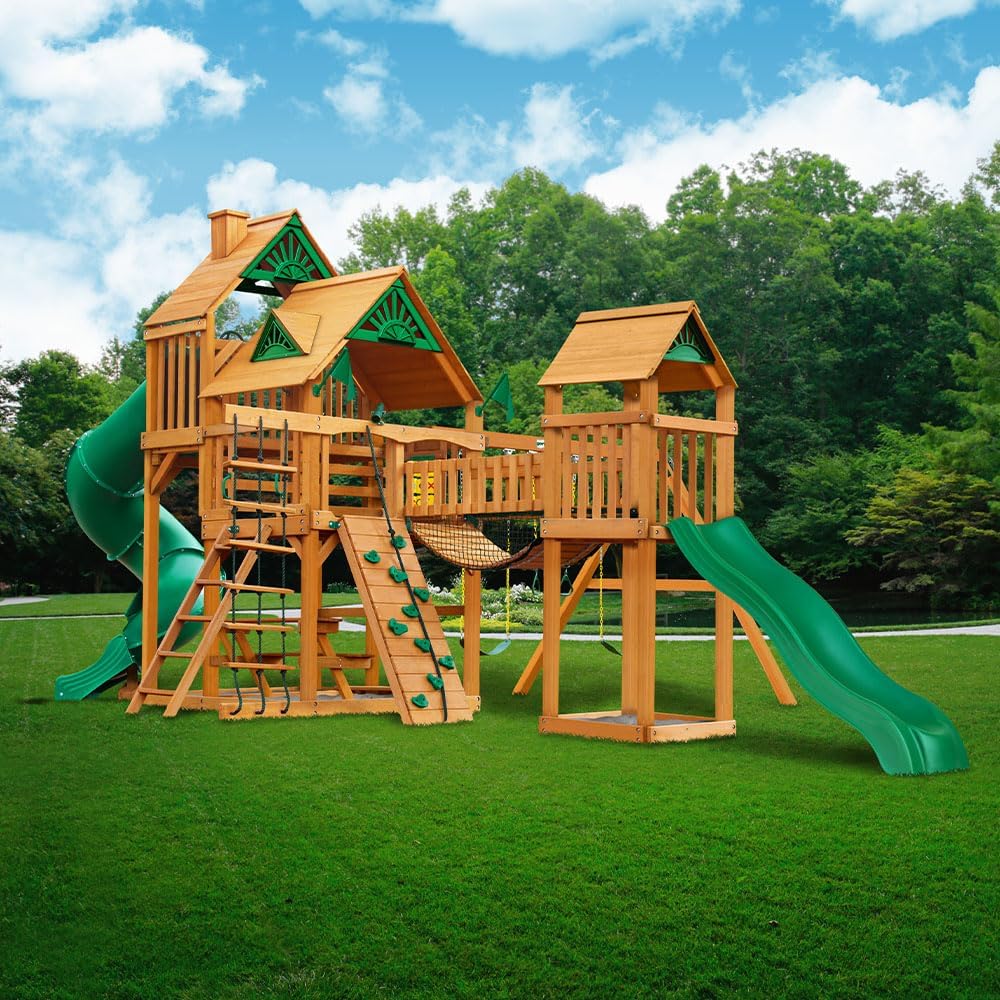
Gorilla
$4,999.99
In stock on Amazon
Check price on AmazonPowder-Coated Steel: The Underdog That Wins on Math
Why Steel Gets Underestimated
Steel gets written off as a budget material in residential playground conversations, and that reputation is partly deserved at the very low end — thin-gauge steel sets assembled from cheap tubular components, with minimal cross-bracing and hardware that strips after two seasons. But quality powder-coated steel, built to the gauge and connection standards that reputable manufacturers use, is genuinely the most durable residential material available and the easiest to maintain.
Here’s what makes the difference at the material level:
- Wall thickness (gauge) matters enormously. Eleven-gauge steel (about one-eighth inch wall thickness) is roughly twice as rigid as 14-gauge. Manufacturer spec sheets typically list this; if they don’t, treat that omission as a warning sign.
- Powder coating versus paint. Powder coating — an electrostatic process that bakes the finish onto the metal — resists chipping, peeling, and UV degradation far better than spray paint. Paint failure, not structural failure, is the first visible problem on budget steel sets.
- Connection hardware. Steel sets that use through-bolts with lock nuts outperform sets using self-tapping screws in multi-year durability. The spec sheet or assembly manual will tell you which is which.
What Steel Owners Actually Deal With
The CPSC’s Public Playground Safety Handbook (Publication 325) identifies rust at connection points as a primary steel-frame failure mode. In humid climates, quality powder coating at connections is non-negotiable; look for manufacturers who specify marine-grade or galvanized hardware underneath the coating.
Maintenance on a quality steel set is genuinely minimal: wash annually, touch up any paint chips with manufacturer-matched paint immediately (bare steel rusts fast once exposed), and lubricate swing hangers and ring hardware every spring. Realistically, that’s two hours per year.
The honest limitation: steel sets at the residential price point typically offer less configurability than cedar modular systems. Most residential steel sets are fixed configurations — you’re not adding a rock wall in year three. For families who know what they want now and aren’t planning to expand, that’s not a real limitation.
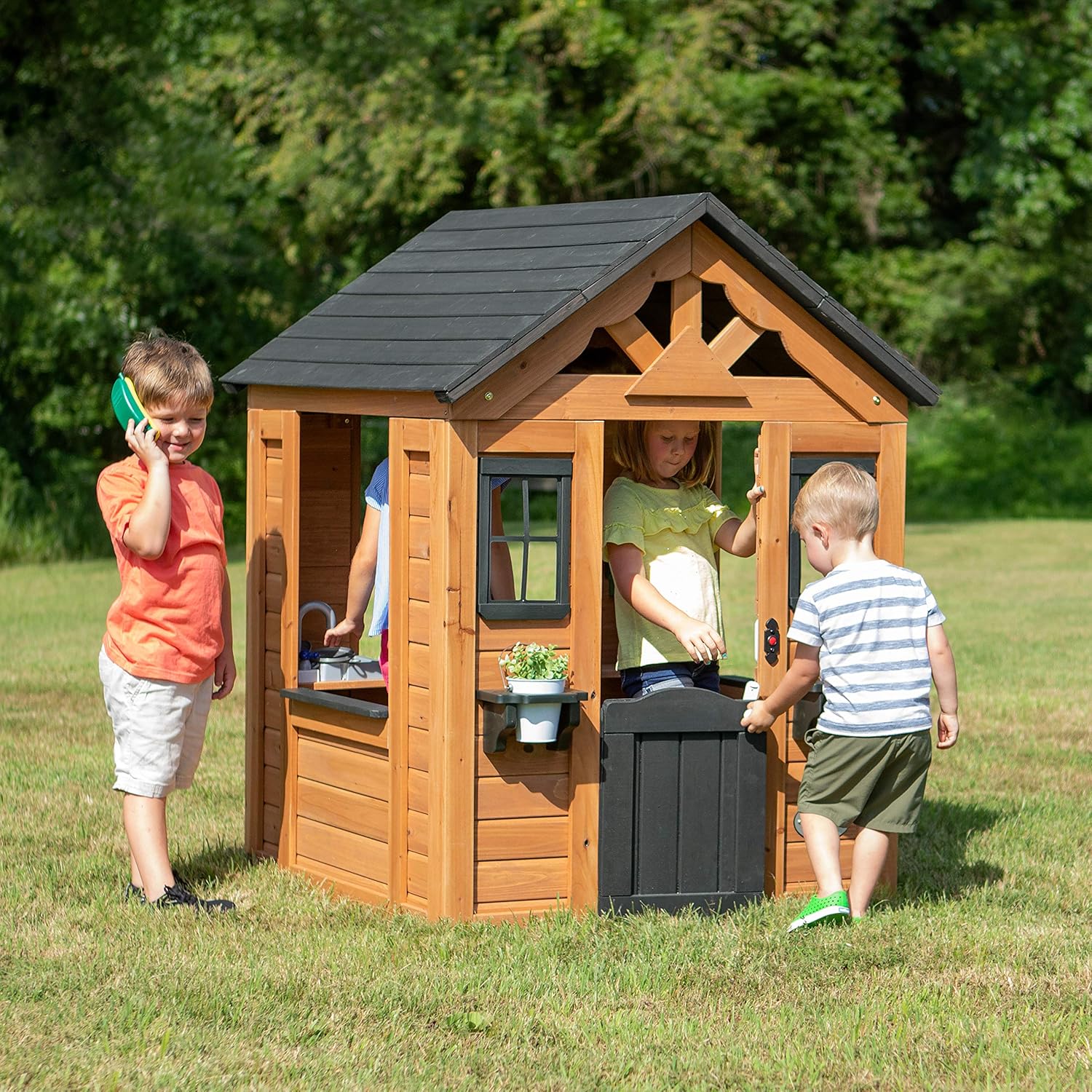
Backyard
$248.98
In stock on Amazon
Check price on AmazonSide-by-Side: How the Three Materials Stack Up
| Feature | Cedar Wood | Vinyl-Coated Wood | Powder-Coated Steel |
|---|---|---|---|
| Up-front cost | Mid | Mid-High | Low-Mid |
| 10-year maintenance burden | High | Low | Very Low |
| Rot/rust resistance | Good (with sealing) | Very Good | Good (with touch-ups) |
| Configurability | High | High | Low-Mid |
| Best climate fit | Dry/moderate | Humid/wet | Any |
| Aesthetics | Warm/natural | Polished/clean | Utilitarian |
Backyard
$248.98
In stock on Amazon
Check price on AmazonBackyard
$1,198.99
In stock on Amazon
Check price on AmazonGorilla
$4,999.99
In stock on Amazon
Check price on AmazonThe Decision Rule: If X, Then Y
You’ve read the trade-offs. Here’s how to close the decision.
Choose Cedar If…
You have a moderate-to-generous budget, love the look of natural wood, and will realistically maintain a two-year sealing schedule. Buy from a manufacturer who uses clear-grade cedar (fewer knots, tighter grain), get anchored post bases that keep wood off the soil surface, and treat it in year one before the first winter. Cedar is the most visually rewarding option on this list — if you do your part.
Backyard
$1,198.99
In stock on Amazon
Check price on AmazonChoose Vinyl-Coated Wood If…
You have a moderate-to-premium budget, want minimal ongoing maintenance, and live in a high-humidity or high-rainfall climate. Vet the post-base construction carefully before buying — you want vinyl coverage all the way to the anchor, not just above ground. Budget for the higher up-front cost and reclaim your weekends for the next decade.
Gorilla
$4,999.99
In stock on Amazon
Check price on AmazonChoose Powder-Coated Steel If…
You’re budget-constrained, buying for younger children (ages two through seven), or want the easiest installation footprint. Don’t buy the cheapest possible version — the failure modes on low-gauge, minimally coated steel are real. Step up to a mid-tier steel option with documented gauge specs and through-bolt construction, and you’ll have a set that’s still solid at year seven for a fraction of the wood-frame cost.
Backyard
$248.98
In stock on Amazon
Check price on AmazonA Note for Commercial and Institutional Buyers
The calculus shifts for school, daycare, and park-and-rec procurement. The National Recreation and Park Association’s Park Maintenance Standards recommend equipment that supports documented inspection protocols. Vinyl-wrapped commercial-grade equipment — or commercial powder-coated steel with galvanized hardware — typically meets those requirements with the lowest total staff-hour burden. Pure cedar at commercial scale means quarterly inspections and documented sealing logs, which is manageable but requires sustained buy-in from your facilities team.
ASTM F1487 compliance, IPEMA certification (an independent third-party verification that a product meets ASTM standards), and ADA-compliant access routes should be table-stakes requirements in any commercial RFP, regardless of material.
Gorilla
$4,999.99
In stock on Amazon
Check price on AmazonMaterial choice is genuinely consequential — it’s not a stylistic preference you can swap out later. Cedar, vinyl-coated wood, and quality steel all have legitimate claims on the right buyer’s dollars. The one that survives year five is whichever one matches your climate, your maintenance habits, and your budget reality — not the one with the most attractive listing photo. Name those three variables honestly before you buy, and you’ll make the right call.